
Introduction to Gravitational Waves
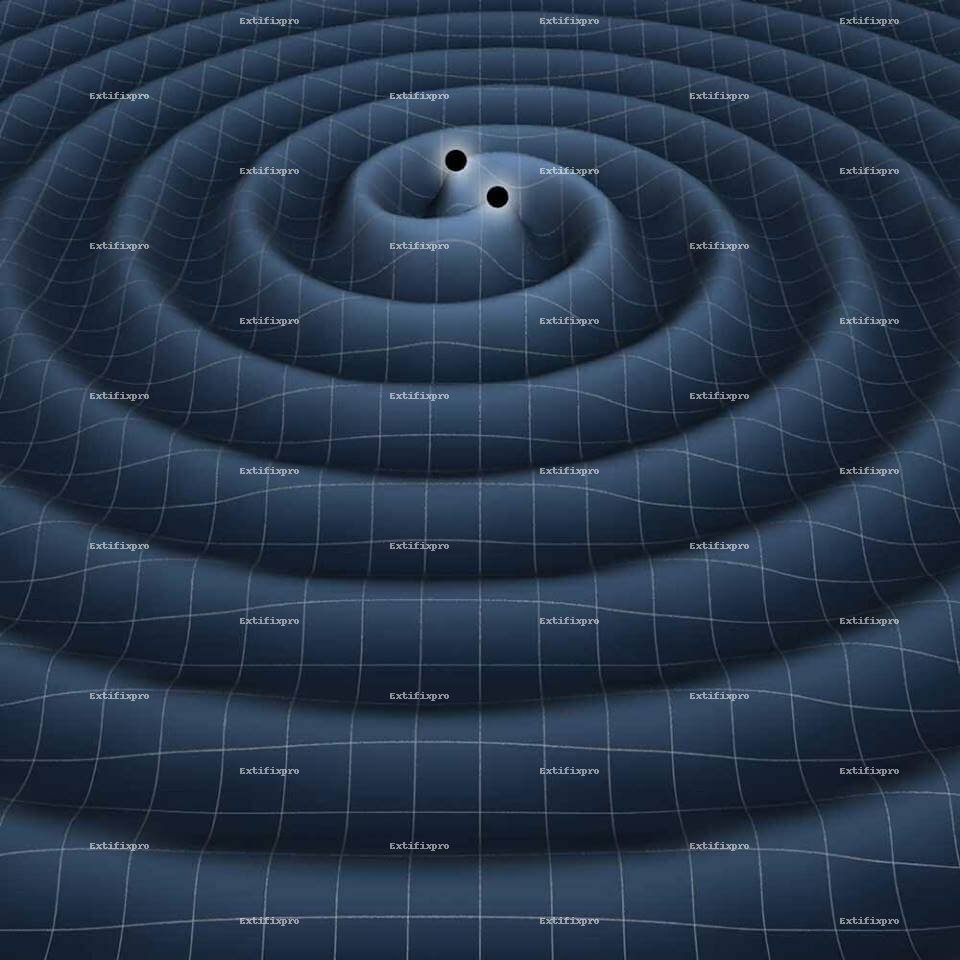
Gravitational waves are ripples in the fabric of spacetime caused by the acceleration of massive objects, such as merging black holes or neutron stars. Predicted by Albert Einstein in 1916 as part of his general theory of relativity, these phenomena have transformed our understanding of the universe. The first direct detection of gravitational waves by the Laser Interferometer Gravitational-Wave Observatory (LIGO) in 2015 marked a groundbreaking milestone in astrophysics, allowing scientists to observe events that were previously hidden from traditional telescopes. This comprehensive guide explores the properties, detection methods, and implications of gravitational waves, highlighting their significance in modern physics.
Historical Background of Gravitational Waves
The concept of gravitational waves emerged from Einstein’s theory of general relativity, which describes gravity as a geometric property of space and time. Einstein’s predictions remained largely theoretical until the late 20th century when advancements in technology enabled scientists to test his ideas.
Theoretical Foundations
Einstein’s general relativity laid the groundwork for understanding gravitational waves. According to this theory:
- Gravity is not a force but a curvature of spacetime caused by mass.
- Accelerating masses would create ripples in spacetime, analogous to waves in water.
- These ripples propagate at the speed of light.
Pioneering Experiments
In the decades following Einstein’s prediction, numerous experiments were conducted to search for gravitational waves, but it wasn’t until the establishment of LIGO that significant progress was made. The key milestones include:
- 1970s: Development of laser interferometry technology.
- 1990s: Construction of LIGO facilities in Washington and Louisiana.
- 2015: First detection of gravitational waves from a binary black hole merger.
Significance of Gravitational Waves in Modern Physics
Gravitational waves have profound implications for our understanding of the universe. Their significance can be summarized as follows:
New Insights into Cosmic Events
Gravitational waves provide a new way to observe astronomical events, revealing details that electromagnetic observations cannot. They have opened up a new era in astrophysics known as gravitational wave astronomy. For instance, while traditional telescopes can detect light from distant stars and galaxies, gravitational waves allow scientists to “hear” the universe, capturing information about cosmic events that occur far beyond the reach of visible light. This capability has not only led to new discoveries but also enhanced our understanding of existing phenomena.
Testing General Relativity
The detection of gravitational waves offers a unique opportunity to test Einstein’s theory of general relativity under extreme conditions. For example:
- Confirming the existence of black holes and their properties.
- Examining the dynamics of neutron star collisions.
- Providing empirical evidence for the behavior of gravity at cosmic scales.
Properties of Gravitational Waves
Understanding the properties of gravitational waves is crucial for interpreting their signals and implications. These properties help scientists decode the information carried by these waves from their cosmic origins.
Wave-like Nature of Gravitational Waves
Gravitational waves exhibit several wave-like properties, including:
- Amplitude: The strength of the wave, which relates to the energy of the event. Higher amplitude waves indicate more energetic events, such as mergers involving massive black holes.
- Frequency: The rate at which the wave oscillates, providing insights into the source’s dynamics. For instance, the frequency can reveal information about how quickly two objects are spiraling together before merging.
- Polarization: Gravitational waves can be polarized, affecting how they interact with detectors. This property allows scientists to distinguish between different types of sources and better understand their physical characteristics.
Speed and Propagation of Gravitational Waves
Gravitational waves travel at the speed of light, allowing them to reach Earth from distant cosmic events. Their propagation characteristics include:
- Spacetime distortion: Gravitational waves stretch and compress spacetime as they pass, leading to measurable changes in distances between objects on Earth. This effect is minuscule but detectable with advanced instruments.
- Directional travel: The waves travel outward from the source in all directions, allowing them to be detected by multiple observatories around the world simultaneously.
Detection Methods of Gravitational Waves
The detection of gravitational waves relies on advanced technologies designed to measure tiny changes in distance caused by passing waves. These methods are critical for capturing the faint signals emitted by some of the universe’s most violent events.
Ground-Based Detectors
Ground-based detectors like LIGO and Virgo use laser interferometry to detect gravitational waves. They measure changes in length between mirrors spaced kilometers apart. These detectors have been pivotal in confirming the existence of gravitational waves and have already made several groundbreaking discoveries.
| Detector | Location | Operational Since |
|---|---|---|
| LIGO | USA (Washington & Louisiana) | 2015 |
| Virgo | Italy | 2007 |
Space-Based Observatories
In addition to ground-based detectors, space-based observatories like LISA (Laser Interferometer Space Antenna) are being developed to detect gravitational waves from sources that are inaccessible to Earth-based instruments. These missions promise to enhance our ability to observe lower frequency gravitational waves that originate from sources such as supermassive black hole mergers and early cosmic events that shaped our universe. By positioning detectors in space, we can eliminate many environmental noise factors that hinder ground-based observations, thus improving sensitivity and expanding our observational capabilities.
Astrophysical Implications of Gravitational Waves
The detection of gravitational waves has significant implications for astrophysics, particularly in understanding violent cosmic events. These observations not only confirm existing theories but also challenge our understanding and open new avenues for research. By studying these waves, scientists can gain insights into processes that occur during some of the most energetic events in the universe.
Black Hole Mergers and Gravitational Waves
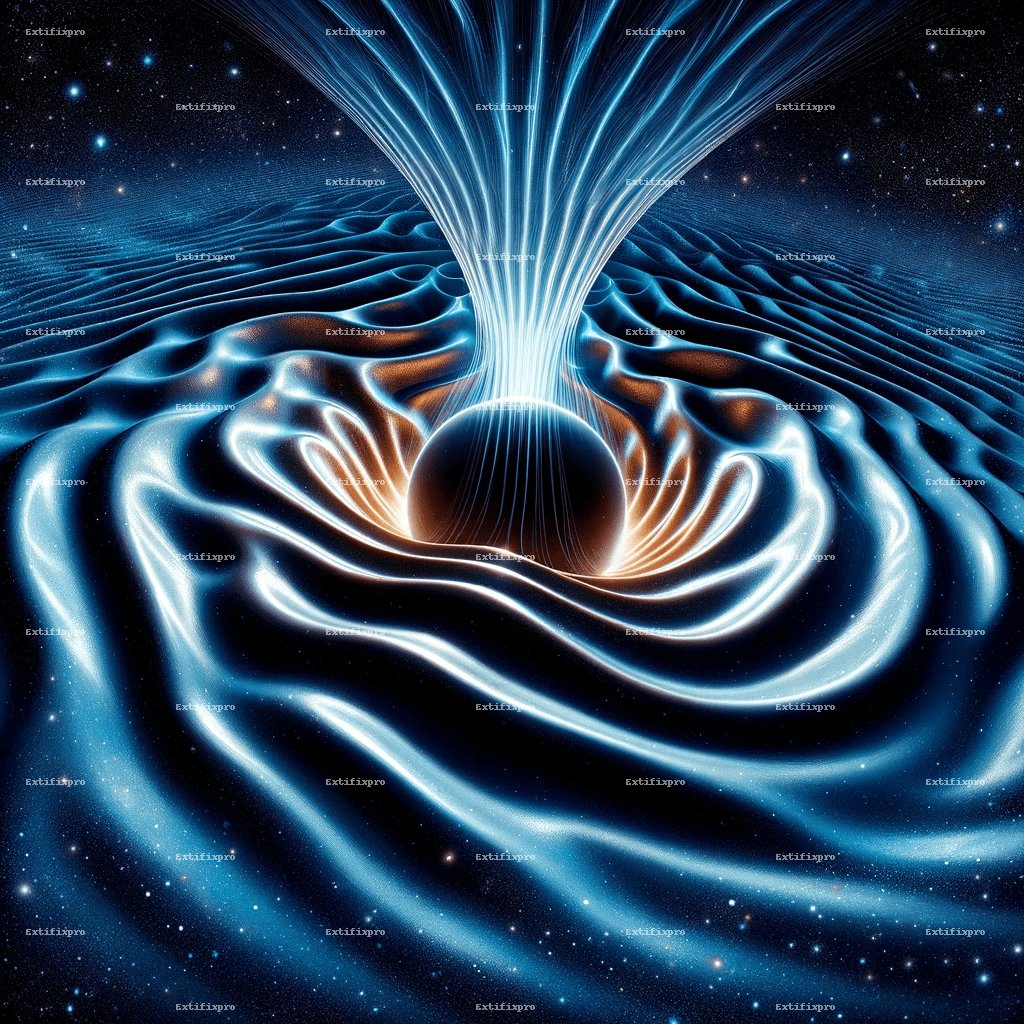
One of the most exciting discoveries has been the observation of gravitational waves from black hole mergers. Key findings include:
- Confirmation of Black Holes: The observations confirmed that black holes exist with masses previously thought impossible, including pairs with total masses exceeding 100 times that of our Sun. This challenges previous models of stellar evolution and black hole formation.
- Insights into Black Hole Formation: By studying these mergers, scientists gain insights into how black holes form and evolve over time within galaxies. Understanding these processes is crucial for explaining the distribution and characteristics of black holes across the universe.
- Dynamics of Binary Systems: The data collected from these events has helped researchers understand how binary black hole systems interact and merge over billions of years. This information is vital for developing accurate models that describe the life cycles of stars and their end states.
Neutron Stars and Binary Systems
Gravitational waves have also been detected from neutron star mergers, providing unique insights into:
- The Behavior of Matter Under Extreme Conditions: The collisions produce conditions not replicable on Earth, offering a glimpse into matter’s behavior at densities greater than atomic nuclei. This helps scientists explore fundamental questions about nuclear physics and states of matter.
- Nucleosynthesis of Heavy Elements: These mergers are believed to be a primary source of heavy elements like gold and platinum in the universe, as observed through electromagnetic counterparts like kilonovae. The study of these events helps connect astrophysics with cosmology and elemental synthesis.
- The Nature of Neutron Stars: Observations help elucidate neutron star properties, including their internal structure and equation of state. Understanding these characteristics is essential for predicting how neutron stars behave under various conditions.
Gravitational Waves and General Relativity
The relationship between gravitational waves and Einstein’s theory of general relativity is a critical area of study that has led to a deeper understanding of fundamental physics. The confirmations provided by gravitational wave detections reinforce our confidence in this cornerstone theory.
Einstein’s Theory of General Relativity
General relativity posits that massive objects warp spacetime, leading to gravitational waves. This theory has been validated through various experiments, including:
- Observational Evidence from Binary Pulsars: Measurements of orbital decay in binary pulsar systems have provided indirect evidence for gravitational wave emission consistent with general relativity predictions. This empirical support enhances our understanding of gravity’s effects on time and space.
- Gravitational Lensing Effects: Observations have shown how massive objects can bend light from distant stars, confirming predictions made by general relativity regarding gravity’s influence on light paths. Such phenomena serve as a powerful tool for astronomers studying distant galaxies and cosmic structures.
Validation of General Relativity through Gravitational Waves
The direct detection of gravitational waves offers compelling evidence for general relativity. Key aspects include:
- Matching Predictions: The waveforms detected match predictions derived from general relativity, reinforcing the theory’s accuracy in describing gravity’s nature. This alignment strengthens our understanding that gravity behaves consistently across different scales and conditions.
- The Speed Limit: Confirming that gravitational waves travel at the speed of light has profound implications for our understanding of causality in the universe. This consistency reinforces fundamental principles regarding information transfer and interactions in physics.
Future Prospects in Gravitational Wave Research
The field of gravitational wave research is rapidly evolving with numerous future prospects that could further enhance our understanding of the universe. Ongoing developments promise exciting advancements that will shape astrophysics for decades to come.
Technological Advancements for Enhanced Detection
Future detectors aim to improve sensitivity and expand the frequency range of gravitational wave observations. This includes:
- LISA Mission: The Laser Interferometer Space Antenna will be a space-based observatory designed to detect low-frequency gravitational waves from supermassive black hole mergers and other cosmological phenomena. Its innovative design will allow it to measure signals with unprecedented precision.
- Innovations in Signal Processing: Advances in data analysis techniques will allow researchers to better identify and characterize signals amidst noise, improving detection rates and accuracy. Machine learning algorithms are expected to play a significant role in distinguishing genuine signals from background noise.
- Sensitivity Improvements: Enhancements to laser technology and mirror design will lead to more sensitive detectors capable of capturing fainter signals from distant events. As technology progresses, we can expect more frequent detections and deeper insights into cosmic phenomena.
Exploration of Unknown Cosmic Events
The future of gravitational wave astronomy may uncover new cosmic phenomena that could redefine our understanding. Potential areas include:
- Distant Cosmic Events: Detecting signals from the early universe could provide insights into cosmic inflation and the formation of structures like galaxies. Such discoveries may help bridge gaps between astrophysics and cosmology, enhancing our grasp on how the universe evolved over billions of years.
- Exotic Compact Objects: Identifying signals from unknown types of compact objects may challenge current astrophysical theories and lead to discoveries beyond existing models. These findings could alter our understanding of matter under extreme conditions.
- The Nature of Dark Matter: Studying the interactions involving dark matter could shed light on one of the most profound mysteries in modern physics. Understanding its role in cosmic events may lead to breakthroughs in both astrophysics and particle physics.
Impact of Gravitational Waves on Astrophysics
The impact of gravitational waves extends beyond detection, reshaping our understanding of cosmology and astrophysics significantly. Their ability to reveal new information about the universe offers exciting possibilities for future research endeavors. As scientists continue to analyze data from gravitational wave detections, we can expect revelations that will deepen our comprehension of fundamental forces at play in the cosmos.
Revolutionizing our Understanding of the Universe
The combination of gravitational wave data with electromagnetic observations has changed how scientists perceive cosmic events. This revolution includes:
- Synchronized Observations: Joint observations between gravitational wave detectors and traditional telescopes allow for a more comprehensive understanding of cosmic events, such as kilonovae following neutron star mergers. This multimodal approach leads to richer datasets that enhance our overall comprehension.
- A Unified Framework for Cosmology: Integrating gravitational wave data into cosmological models helps clarify the expansion rate of the universe and provides insights into its ultimate fate. Such integration aids in resolving tensions between different measurements regarding cosmic expansion rates.
- A Better Understanding of Cosmic History: Gravitational waves provide a record of past cosmic events, enhancing our knowledge about the history and evolution of galaxies and stellar populations. This archival capability enriches our narrative about how structures formed within the universe over time.
Opening New Avenues for Scientific Exploration
The study of gravitational waves opens new research directions and interdisciplinary collaborations across fields such as astrophysics, cosmology, particle physics, and even philosophy. This collaborative approach fosters advancements in multiple fields while inviting new ideas and perspectives on fundamental questions about reality.
Key Takeaways
- A Groundbreaking Discovery: Gravitational waves are a groundbreaking discovery that has transformed our understanding of the universe since their detection began in 2015.
- A New Observational Tool: Their detection allows scientists to observe cosmic events previously hidden from traditional telescopes, providing unique insights into their dynamics and properties.
- A Testbed for Physics: They offer a unique opportunity to test fundamental theories, particularly general relativity, under extreme conditions where traditional experiments are impossible.
- A Catalyst for Future Research: The study of gravitational waves will continue to inspire new research directions, technological advancements, and interdisciplinary collaborations that will shape our understanding for years to come.
FAQs
What are gravitational waves?
Gravitational waves are ripples in spacetime caused by the acceleration of massive objects, such as merging black holes or neutron stars. They were first detected in 2015 by LIGO, marking a historic moment in astrophysics.
How are gravitational waves detected?
The detection methods involve laser interferometry, where lasers measure tiny changes in distance between mirrors caused by passing gravitational waves. Ground-based detectors like LIGO and Virgo are prime examples utilizing this technology effectively.
Why are gravitational waves important for astrophysics?
The significance lies in their ability to provide a novel method for observing astronomical events, contributing invaluable data for testing general relativity, and enriching our understanding of extreme cosmic phenomena that cannot be studied through electromagnetic means alone.
What have we learned from gravitational wave detections?
The detections have confirmed the existence and characteristics of black holes, revealed intricate details about neutron star mergers, elucidated binary system dynamics, and provided a wealth of information about fundamental physics in extreme environments.
What is the future of gravitational wave research?
The future encompasses advancements in detection technology aimed at improving sensitivity and expanding observational capabilities while exploring unknown cosmic events that could redefine our understanding. The ongoing research promises exciting discoveries ahead!
How can I learn more about gravitational waves?
If you’re interested in delving deeper into this fascinating topic, you can explore resources from reputable sources like LIGO, NASA’s LISA mission, or academic publications focusing on astrophysics and cosmology.
Conclusion about Gravitational Waves
In conclusion, gravitational waves are a revolutionary aspect of modern astrophysics, providing unprecedented insights into the universe’s most violent events. As detection technology advances and our understanding deepens through ongoing research, gravitational waves will continue to play a crucial role in shaping the future landscape of scientific discovery. Their implications extend far beyond astronomy into fundamental physics questions that challenge our perceptions about reality itself. This dynamic field promises continual exploration as we seek answers to some of humanity’s most profound inquiries about existence and our place within this vast cosmos.
The future holds limitless possibilities for discoveries driven by gravitational wave research—each new finding potentially reshaping what we know about space-time itself while propelling humanity forward on its quest for knowledge within this ever-expanding universe.