
Introduction
In a groundbreaking development within the field of condensed matter physics, scientists have successfully employed diamonds to create an entirely new phase of matter known as a rondeau time crystal. This remarkable achievement sheds light on advanced quantum phenomena and opens up potential pathways for enhancing quantum computing technologies, although practical applications remain on the horizon.
Understanding Time Crystals
Time crystals, a fascinating concept introduced theoretically in 2012, represent a unique state of matter that differs significantly from traditional crystals. While conventional crystals, such as diamonds or ice, exhibit a repeating structure in space—characterized by their atomic lattice—time crystals present a pattern that repeats over time. This oscillatory behavior allows them to maintain a state of perpetual motion, defying the conventional laws of thermodynamics.
The Significance of Time Crystals in Quantum Computing
The implications of time crystals for quantum computing are particularly intriguing. As researchers strive to develop more efficient quantum computers, time crystals could potentially lead to the creation of stable quantum memory systems and error-resistant quantum circuits. These advancements could significantly improve the performance and reliability of quantum computing systems, which currently face challenges such as decoherence and error rates.
The Discovery of Rondeau Time Crystals
In a recent study published in the esteemed journal Nature Physics, researchers explored the concept of rondeau time crystals—an innovative phase of matter that harmoniously combines long-range temporal order with short-term disorder. This juxtaposition of stability and variability draws parallels from both nature and art, as noted by Leo Moon, a Ph.D. student at the University of California, Berkeley, and co-author of the study.
Artistic Inspirations Behind Scientific Discoveries
Moon elaborated on the inspiration behind the term “rondo,” which references a musical form characterized by recurring themes interspersed with variations. This artistic parallel reflects how repetitive patterns can emerge in both early art forms and the complex structures of advanced compositions. The most well-known example of a rondo is Mozart’s iconic “Rondo alla Turca,” a piece that has become a staple of classical music.
Scientific Methodology and Findings
To investigate this intriguing temporal phase, the research team utilized carbon-13 atoms embedded in diamonds, specifically focusing on defects known as nitrogen-vacancy (NV) centers. These NV centers occur when nitrogen atoms occupy positions adjacent to vacancies in the diamond lattice, creating points of interest for quantum experimentation.
Manipulating Quantum States with Lasers
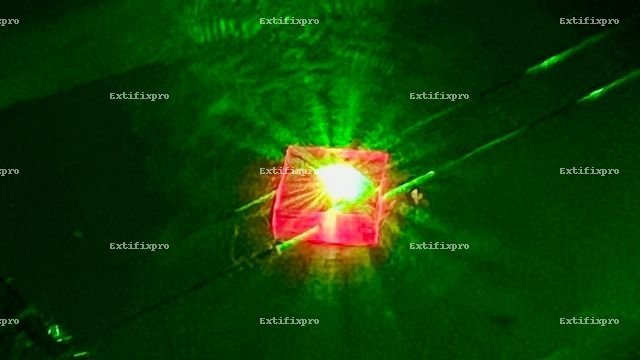
By subjecting the NV centers to laser illumination, the researchers were able to achieve spin polarization within the diamond. This phenomenon is critical for manipulating quantum states, as it allows for the controlled interaction of spins within the material. The team further enhanced this process by employing microwave pulses that bolstered the polarization, alongside protective “spin-locking” pulses that were strategically timed to flip the polarization back.
Information Storage Using Timing Pulses
Remarkably, the researchers were also able to encode information within these timing pulses utilizing ASCII, a character encoding standard commonly used in computing. This innovative approach demonstrates the potential for time crystals to not only serve as a theoretical construct but also as a practical medium for quantum information storage and processing.
The Broader Implications of Rondeau Time Crystals
While the current findings primarily focused on utilizing nuclear spins within diamonds, the authors of the study emphasized that the underlying principles of their research could extend to a wide array of quantum simulation platforms. This flexibility indicates that the techniques developed in this study may be applicable to various materials and systems beyond diamonds, paving the way for future advancements in quantum physics.
Future Research Directions
Looking ahead, the discovery of rondeau time crystals opens up a promising new avenue for investigating the interplay between temporal order and disorder. The researchers expressed hope that their work would inspire further exploration into the properties of time crystals, as well as their potential applications in enhancing quantum technologies. The coexistence of long-range temporal order and micromotion disorder at short timescales presents a rich area for future inquiry.
Conclusion
The creation of a new phase of matter using diamonds not only enriches our understanding of the quantum world but also highlights the potential for artistic concepts to inspire scientific innovation. As researchers continue to unravel the complexities of time crystals, we may be on the cusp of significant breakthroughs that could transform the landscape of quantum computing and beyond. The journey into the realm of time crystals is just beginning, and the implications of these findings could reverberate through both scientific and technological spheres for years to come.