
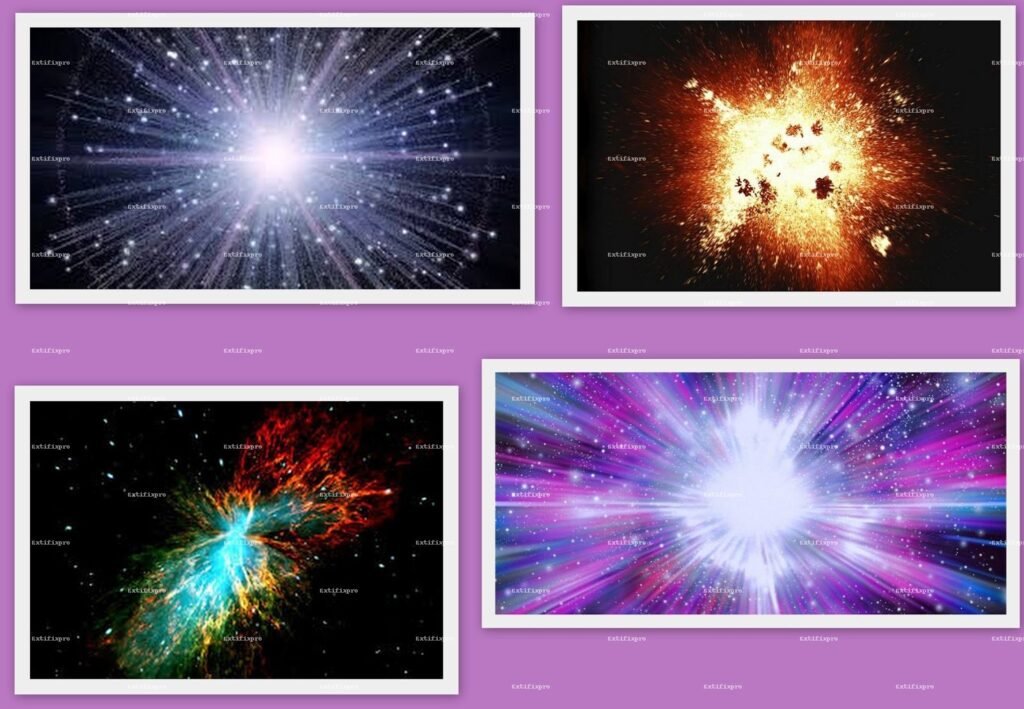
Introduction
The Big Bang theory is a cornerstone of modern cosmology, fundamentally reshaping our understanding of the universe’s origins, evolution, and structure. This scientific model posits that the universe began as an incredibly hot and dense point approximately 13.8 billion years ago, expanding rapidly to form the cosmos we observe today. The implications of the Big Bang theory extend beyond mere historical interest; they influence various fields of science, including physics, astronomy, and even philosophy. In this article, we will explore the profound impact of the Big Bang theory on modern science, examining its origins, supporting evidence, challenges, and future directions in research.
Introduction to the Big Bang Theory
Origins and Development
The Big Bang theory emerged from the work of several key figures in the early 20th century. Among them, Georges Lemaître was instrumental in proposing the idea of an expanding universe. His work laid the foundation for what would become the standard model of cosmology.
Key Points
- Georges Lemaître: Proposed the idea of the universe expanding from a primordial atom.
- Edwin Hubble: Observed the redshift of galaxies, providing evidence for the expanding universe.
- George Gamow: Developed the theory of nucleosynthesis, explaining the formation of light elements.
Key Concepts
Understanding the Big Bang theory requires familiarity with several key concepts:
- Cosmic Expansion: The notion that space itself is stretching, causing galaxies to move away from each other.
- Cosmic Microwave Background (CMB): The afterglow radiation from the Big Bang, detectable in all directions of the universe.
- Nucleosynthesis: The process by which the light elements were formed during the first moments of the universe.
Implications for Cosmology
Expansion of the Universe
The concept of an expanding universe has transformed our understanding of cosmology. The expansion implies that the universe has a finite age and has evolved over time.
Key Points
- The universe is not static; it is continuously expanding.
- The rate of expansion is described by Hubble’s Law, which relates the distance of galaxies to their recessional velocity.
Cosmic Microwave Background
The CMB is a critical piece of evidence for the Big Bang theory. It provides a snapshot of the universe when it was about 380,000 years old, allowing scientists to study its early conditions.
| CMB Characteristics | Significance |
|---|---|
| Uniformity | Indicates a hot, dense state in the early universe. |
| Temperature Fluctuations | Provides insights into the density variations that led to galaxy formation. |
Evidence Supporting the Big Bang
Redshift and Hubble’s Law
Edwin Hubble’s observations revealed that distant galaxies are moving away from us, with their light shifted toward the red end of the spectrum. This redshift is a crucial indicator of cosmic expansion.
Key Points
- Redshift is a phenomenon observed in light from receding galaxies.
- Hubble’s Law states that the velocity of a galaxy’s recession is proportional to its distance from Earth.
Abundance of Light Elements
The Big Bang theory predicts the relative abundance of hydrogen, helium, and lithium in the universe. Observations of these elements align closely with theoretical predictions.
| Element | Predicted Abundance | Observed Abundance |
|---|---|---|
| Hydrogen | 74% | 75% |
| Helium | 24% | 24% |
| Lithium | 2% | 1% |
Challenges and Controversies
Dark Matter and Dark Energy

Despite its successes, the Big Bang theory faces challenges, particularly regarding dark matter and dark energy. These components make up a significant portion of the universe’s total mass-energy content but remain poorly understood.
Key Points
- Dark matter is inferred from gravitational effects on visible matter.
- Dark energy is thought to drive the acceleration of the universe’s expansion.
Inflation Theory
Inflation theory proposes a rapid expansion of the universe in its early moments. While it addresses several issues in cosmology, such as the uniformity of the CMB, it remains a subject of debate.
“Inflation theory provides a plausible explanation for the observed uniformity of the cosmic microwave background.”
Modern Interpretations
Multiverse Theories
The concept of a multiverse suggests that our universe is just one of many. This idea emerges from the inflation theory and poses intriguing questions about the nature of reality.
Key Points
- Multiverse theories challenge traditional notions of a singular universe.
- They open up discussions about parallel universes and different physical laws.
Quantum Cosmology
Quantum cosmology combines principles of quantum mechanics with cosmological models. It seeks to explain the universe’s behavior at its most fundamental levels.
Technological Advancements
Cosmic Microwave Background Radiation Mapping
Advancements in technology have enabled scientists to map the CMB with unprecedented precision. Missions like the Wilkinson Microwave Anisotropy Probe (WMAP) and Planck satellite have revolutionized our understanding of the early universe.
Key Points
- Precise measurements of the CMB provide insights into the universe’s composition and age.
- These missions have confirmed predictions made by the Big Bang theory.
Large Hadron Collider Experiments
The Large Hadron Collider (LHC) has contributed significantly to our understanding of fundamental particles, shedding light on conditions similar to those present just after the Big Bang.
“The discoveries at the LHC have the potential to answer fundamental questions about the universe’s creation.”
Future of Big Bang Research
Exploring Cosmic Evolution
Future research aims to delve deeper into the evolution of the universe, investigating how structures like galaxies formed from the initial conditions of the Big Bang.
Key Points
- Understanding cosmic evolution will provide insights into the universe’s fate.
- New telescopes and observational techniques will enhance our capabilities in this area.
Understanding Dark Energy
Research into dark energy is crucial for comprehending the universe’s accelerating expansion. Future missions and experiments aim to elucidate its nature and impact.
Key Takeaways
- The Big Bang theory is foundational to modern cosmology, explaining the universe’s origins and evolution.
- Technological advancements and observational evidence continue to support and refine this theory.
FAQs
What is the Big Bang theory?
The Big Bang theory posits that the universe began as a hot, dense point approximately 13.8 billion years ago and has been expanding ever since.
What evidence supports the Big Bang theory?
Key evidence includes the observed redshift of galaxies, the cosmic microwave background radiation, and the abundance of light elements, which align with theoretical predictions.
What is dark matter?
Dark matter is a form of matter that does not emit light or energy, making it invisible. Its presence is inferred from its gravitational effects on visible matter in the universe.
How does inflation theory relate to the Big Bang?
Inflation theory suggests that the universe underwent a rapid expansion in its early moments, helping to address several issues in cosmology, including the uniformity of the cosmic microwave background.
What are multiverse theories?
Multiverse theories propose that our universe may be just one of many universes, each with potentially different physical laws and constants.
What role did the Large Hadron Collider play in Big Bang research?
The Large Hadron Collider conducts experiments that recreate conditions similar to those present immediately after the Big Bang, enhancing our understanding of fundamental particles and cosmic conditions.
Conclusion
The Big Bang theory has profoundly influenced modern science, shaping our understanding of the cosmos and driving technological advancements. While challenges remain, ongoing research continues to deepen our knowledge of the universe’s origins and evolution. As we explore the implications of this theory, we not only gain insights into our cosmic past but also pave the way for future discoveries that could redefine our understanding of reality itself.
Further Exploration of the Big Bang Theory
The Role of Observational Astronomy
Observational astronomy plays a pivotal role in the ongoing validation and refinement of the Big Bang theory. Telescopes and space missions have expanded our ability to gather data about the universe, allowing scientists to observe phenomena that were previously beyond reach.
Key Observational Instruments
- Hubble Space Telescope (HST): Launched in 1990, the HST has provided breathtaking images and essential data regarding distant galaxies, supernovae, and the expansion of the universe. Its observations have confirmed the existence of dark energy and refined measurements of the Hubble constant.
- James Webb Space Telescope (JWST): Launched in December 2021, JWST aims to explore the universe’s first galaxies, stars, and planetary systems. Its advanced infrared capabilities allow it to peer through cosmic dust and gas, offering unprecedented insights into the early universe.
- European Extremely Large Telescope (E-ELT): Expected to begin operations in the coming years, this ground-based telescope will be the largest optical telescope in the world. It will provide high-resolution observations that could enhance our understanding of cosmic structures formed in the early universe.
Understanding Cosmic Structures
As we learn more about the universe’s structure—galaxies, clusters, and superclusters—we gain insights into the processes that shaped cosmic evolution. The Big Bang theory posits that the universe’s initial conditions led to the formation of these structures over billions of years. Through simulations and observations, scientists can trace the growth of cosmic structures from simple fluctuations in the early universe to the complex networks we see today.
Key Concepts in Cosmic Structure Formation
- Dark Matter Halos: The gravitational influence of dark matter is crucial in forming galaxies and large-scale structures. Galaxies are thought to form within these dark matter halos, which provide the necessary gravitational pull to attract visible matter.
- Cosmic Web: The visualization of the large-scale structure of the universe resembles a web, with galaxies arranged along filaments and walls, separated by vast voids. This cosmic web is the result of gravitational interactions and the expansion of the universe.
The Nature of Time and Space
The implications of the Big Bang theory extend to our understanding of time and space. According to general relativity, the fabric of spacetime is influenced by mass and energy. As the universe expands, the nature of time itself is reconsidered. Some cosmologists propose that time may have a beginning, originating from the Big Bang, while others explore models in which time is cyclical or infinite.
Philosophical Implications
The exploration of time and space raises profound philosophical questions about the nature of reality, existence, and the universe’s ultimate fate. The concept of time beginning with the Big Bang challenges traditional notions of cause and effect, inviting philosophical inquiry into what existed before the universe and whether the universe has a purpose or direction.
Educational and Outreach Efforts
Engaging the Public with Cosmology
As the Big Bang theory continues to capture the imagination of scientists and the public alike, outreach and educational initiatives play a vital role in promoting understanding of complex cosmological concepts. Astronomy clubs, public lectures, and science festivals provide platforms for enthusiasts to learn from experts and engage with the latest discoveries.
Popular Science Communication
Books, documentaries, and podcasts have become essential tools for communicating the wonders of the universe. Notable works, such as A Brief History of Time by Stephen Hawking and The Universe in a Nutshell, have made complex ideas accessible to a broad audience. These resources inspire curiosity and encourage future generations to pursue careers in science and research.
Citizen Science Projects
The rise of citizen science initiatives empowers individuals to contribute to scientific research. Projects like Galaxy Zoo allow volunteers to classify galaxies from images captured by telescopes, helping researchers analyze vast amounts of data. This collaborative approach fosters a sense of community and investment in scientific exploration.
Interdisciplinary Connections
The Intersection of Cosmology and Other Fields
The Big Bang theory’s implications extend beyond traditional physics and astronomy, influencing various disciplines, including philosophy, art, and even theology. Exploring these intersections enhances our understanding of the universe and our place within it.
Cosmology and Philosophy
Philosophers have long grappled with questions about existence, reality, and the nature of the universe. The Big Bang theory provides a scientific framework that informs philosophical debates about the cosmos. Key philosophical questions include:
- What does it mean for something to exist? If the universe began with the Big Bang, what existed before it?
- Can the universe have a purpose? If the universe is constantly evolving, does it have a direction or endpoint?
Art Inspired by Cosmology
The beauty of the universe has inspired countless artists throughout history. From Van Gogh’s Starry Night to modern digital art depicting cosmic landscapes, the interplay between art and cosmology fosters a unique appreciation of the universe’s complexity. Artists often use their work to convey the awe and mystery of the cosmos, inviting viewers to contemplate their place in the universe.
Theological Perspectives
The Big Bang theory also intersects with theological discussions about creation and existence. Many religious traditions grapple with reconciling scientific discoveries with their beliefs about the universe’s origins. Some see the Big Bang as a moment of divine creation, while others may interpret it as a challenge to traditional narratives. This dialogue between science and religion highlights the diverse ways humanity seeks to understand the cosmos.
The Future of Cosmological Research
Next-Generation Space Missions
As technology advances, new space missions will continue to push the boundaries of our understanding of the universe. Upcoming missions like the Lunar Gateway and the Mars Sample Return Mission aim to explore celestial bodies within our solar system, providing insights into the conditions that existed in the early solar system and the potential for life beyond Earth.
International Collaboration
Cosmological research increasingly relies on international collaboration. Projects like the Event Horizon Telescope and the LIGO (Laser Interferometer Gravitational-Wave Observatory) network unite scientists from around the world in their quest to understand the universe. Such collaborations enhance our ability to tackle complex questions and share knowledge across borders.
Artificial Intelligence and Data Analysis
The rise of artificial intelligence (AI) and machine learning is transforming how scientists analyze vast datasets generated by telescopes and experiments. AI algorithms can identify patterns and anomalies in data, leading to new discoveries and insights into cosmic phenomena. As these technologies advance, they will play a crucial role in shaping the future of cosmological research.
Conclusion
The Big Bang theory stands as a monumental achievement in human understanding, bridging disciplines and inspiring curiosity about our universe. As we delve deeper into its implications and explore new frontiers in research, we continue to uncover the mysteries of existence and the cosmos. Through technological advancements, interdisciplinary connections, and community engagement, we remain committed to unraveling the complexities of the universe, ensuring that the quest for knowledge endures for generations to come.
Key Takeaways
- The Big Bang theory is foundational to modern cosmology, explaining the universe’s origins and evolution.
- Technological advancements and observational evidence continue to support and refine this theory.
- The interplay between cosmology and other fields, including philosophy and art, enriches our understanding of the universe.
- Future research and missions promise to deepen our insights into cosmic evolution and the fundamental nature of reality.
FAQs
What is the significance of the cosmic microwave background radiation?
The cosmic microwave background radiation is a remnant of the early universe, providing crucial evidence for the Big Bang theory. It represents the thermal radiation filling the universe, offering insights into its early conditions and the processes that shaped its evolution.
Why is dark matter important in cosmology?
Dark matter is essential in understanding the universe’s structure and evolution. It provides the gravitational framework necessary for galaxies and large-scale structures to form. Despite being invisible, its presence is inferred from its influence on visible matter and cosmic phenomena.
How does future research impact our understanding of the universe?
Future research promises to enhance our understanding of the universe’s origins, structure, and fate. New technologies and international collaborations will uncover new discoveries, refine existing theories, and address unresolved questions in cosmology.
What philosophical questions arise from the Big Bang theory?
The Big Bang theory raises questions about existence, the nature of time, and whether the universe has a purpose. It challenges traditional notions of causality and invites philosophical inquiry into what preceded the universe and its ultimate fate.
How can I get involved in cosmological research?
Individuals can engage with cosmology through citizen science projects, educational programs, and outreach initiatives. Many organizations offer opportunities for volunteers to contribute to scientific research, making it accessible to the public.
What is the role of technology in advancing cosmological research?
Technology is crucial in advancing cosmological research, enabling scientists to gather and analyze vast amounts of data. Innovations in observational instruments, data analysis tools, and computational techniques are essential for deepening our understanding of the universe.
In summary, the Big Bang theory not only provides a framework for understanding the universe’s origins but also inspires ongoing exploration and discovery across various fields. As we continue to push the boundaries of knowledge, we open ourselves to new insights that challenge our perceptions and expand our understanding of reality itself.